“Properly implemented, MOSA enables cost-effective and responsive modernization and sustainment of weapons systems, and allows for more competition throughout the programmatic lifecycle, avoiding vendor lock.” Pentagon Memo November 7th, 2025, on Transforming the Defense Acquisition System.
As the MOSA initiative advances across defense programs, embedded computing companies are collaborating to deliver proven, interoperable systems and boards that aim to accelerate the field testing and deployment of systems aligned to SOSA. Several successful live demos recently demonstrated at AUSA 2025 in Washington, DC underscore the critical work being done to improve the engineering and upgradeability of modern weapons and defense systems.
We asked a couple of SOSA partners: How is proven interoperability strengthening the MOSA ecosystem and what challenges have been mitigated through successful partner demonstrations? But first, Ken Grob, our director of embedded technologies, kicks off the blog with his thoughts.
The MOSA initiative has moved well beyond concept and conversation — it's delivering real-world, mission-ready systems. We're talking about a viable framework already supporting AI processing, RF monitoring, electronic warfare, and vetronics applications using interchangeable components from multiple suppliers.
Interoperability isn't merely an aspiration of MOSA — it's the defining proof point. When multi-vendor systems operate cohesively under real workloads, we move from theoretical standards to operational confidence. Elma has seen this firsthand through successful demonstrations with partners at AUSA and in several recent Tri-Service Open Architecture interoperability events.
These visible, repeatable integrations are shifting the industry's mindset and accelerating adoption. As a company that has participated in open standards for decades — including VPX and SOSA — Elma has watched industry participation grow dramatically. Hundreds of companies are now developing solutions around the SOSA technical standard, with contributions expanding rapidly over the last three to five years.
This momentum reflects how MOSA is dismantling long-standing barriers: integration complexity, slow deployment cycles, difficult upgrades, and high system costs. Pre-validated, interoperable components mean shorter development timelines and reduced integration risks compared to proprietary engineering. With building blocks like SDRs, Ethernet switches, CPUs, and data acquisition cards available off the shelf, designers can accelerate development and execute more cost-effective upgrades.
Proven interoperability is what has turned MOSA from concept into capability — and as multi-vendor systems continue to demonstrate reliable performance in real operational environments, confidence in open standards only grows.
Contributor: Chris Fadeley, Chief Technology Officer, EIZO Rugged Solutions
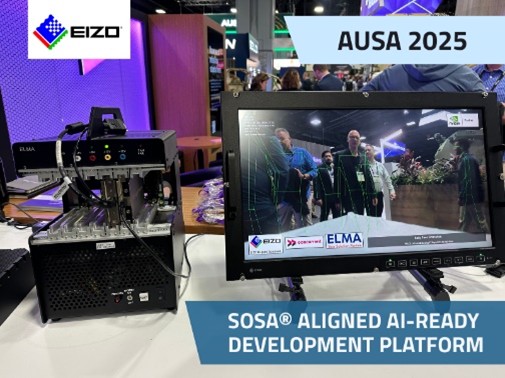
Over the past several years, one point has become continually messaged: the “A” in MOSA stands for approach, and that distinction is critical. MOSA was never intended to be a rigid checklist or a prescriptive mandate. Instead, it has always been a guiding philosophy for how we design, integrate, and evolve capability.
And like any philosophy, it must operate alongside real-world constraints such as budgets, timelines, and shifting geopolitical priorities. While those external forces can’t always be controlled, what we as suppliers to the market can do is influence the technology we build, the standards we adopt, and how we work together across the ecosystem.
That is where proven interoperability has made the biggest impact.
A few years ago, many of the standards we now rely on were still being shaped, refined, or stress-tested for the first time. Hardware and software partners alike were still updating their portfolios to align with emerging requirements. Demonstrations often required a lot of behind-the-scenes customization and work-arounds prior to being able to show to the public.
Fast-forward to today, and the difference is striking. Recent integration work for partner demonstrations showed us how valuable MOSA is just from how much easier it has been to architect and produce. Hardware has matured to the point that system components truly can be dropped in, powered on, and integrated with minimal effort.
On the software side, the story is similar. The broader software ecosystem in many industries has embraced containerization, open source, and portability. This has enabled software partners to showcase real capability immediately onto mission deployable hardware. We previously would see many software vendors demonstrate on off-the-shelf hardware, with end users knowing there would be a significant gap to bring it to deployable hardware. Now, that is no longer a barrier and I’m excited to see what other solutions can be demonstrated to market in quick turn.
The result is an ecosystem that is finally realizing both the intent and potential of MOSA: rapid capability insertion made possible through open, modular, and collaborative design. (Figure 1)
Looking back, if industry partners, like ourselves and others involved in these interoperability initiatives, didn’t step up early and aggressively embrace this approach, we would not be where we are today. The urgency from the end users in this market is real and continually messaged and MOSA is the clearest strategy to fulfill this urgency.
Contributor: Dinesh Jain, FPGA Product Manager, Abaco Systems
January 2026 is the 7-year anniversary of the first publication of the historic Tri-Services memo that outlined the direction stating that future new programs and upgrades should include MOSA supporting standards. Our industry knew this moment was coming and were already defining product development roadmaps to align with the vision. MOSA defined the framework and the new rules of engagement, and the industry dug deep into their respective core expertise to deliver solutions that aligned to the standard.
MOSA touches all aspects of complex programs, and it is almost impossible for one vendor to provide a complete solution, much less the most optimal solution for each block that makes the complete chain, whether it be RF, low-latency processing, ruggedization, chassis, SWaP or any number of requirements to deliver the most advanced systems.

There was industry collaboration pre-MOSA, but since the release of the original memo, there has been an observable increase in reaching across the aisle and working together. While Abaco has a pedigree for building some of the most advanced RF and compute-processing hardware, it works closely with multiple industry partners to ensure interoperability through standards-based integration and testing.
Every partner brings their best capabilities to the table, because we all understand that synergy creates greater value than individual contributions. An example of this collaboration resulted in the CMFF demo (pictured) which highlights MOSA in action for SDR communications. (Figure 2)
Third-party interoperability forces product teams to ensure they are following industry standards. Signaling protocols is one area where some liberties can be taken to optimize for a particular use case. However, such implementations tend to be custom and generally not portable, thereby compromising the system’s future upgradability and potential dependency on a single source.
Through the CMFF collaboration, all the partners delivered their most advanced hardware and software, and worked together to ensure that all the components performed as a seamless, multifaceted system.
The most recent memo was released in November 2025 that now makes MOSA mandatory for most new acquisitions, creating a new urgency to identify actions each of the branches is undertaking to comply with the MOSA mandate. Abaco’s product development process includes collaboration with industry partners to demonstrate proven modular interoperability. Collectively, it represents our commitment to meeting the mandate through open standards.

