Modern radar and electronic warfare (EW) systems face some of the most intense pressures regarding system flexibility, scalability, and upgradeability. Addressing these challenges through a standardized framework means defense system developers can deliver modular, interoperable systems while reducing development time and cost. The Sensor Open Systems Architecture, or SOSA® provides this critical infrastructure. (Figure 1)
Standardized Hardware & Software for Complex Systems
SOSA’s reference architecture model supports multiple mission threads, including radar and EW modalities. The standard also defines SOSA modules, which represent the logical building blocks for specific sensor types. Each module includes functional descriptions and interface definitions, detailing the input and output data paths needed to support module interactions
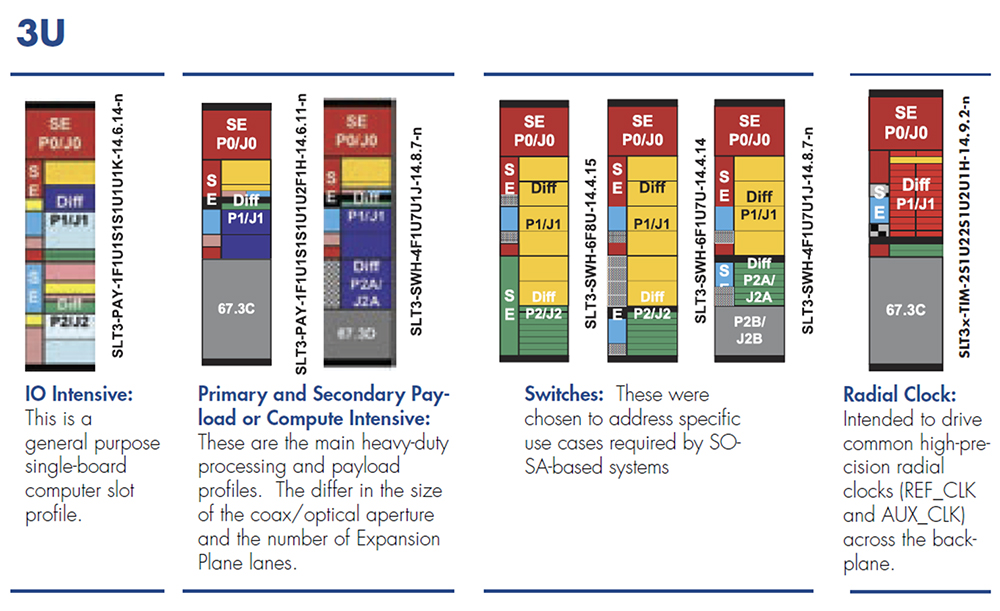
Hardware elements, detailing physical specifications of the processor, I/O, and payload interface cards (PICs) are also defined. These include payload cards, I/O-intensive and compute-intensive single board computers (SBCs), and switches. Hardware is then paired with profiles that describe signal interfaces, pin assignments, and mapping to OpenVPX connectors installed on the PICs.
SOSA also extends to software architecture. Standardized software components, described through defined APIs, work alongside hardware elements to create a cohesive framework. This framework supports operating systems, runtime environments, and application programs, ensuring that radar and EW systems can be implemented efficiently within a standard modular architecture.
Development Considerations in EW & Radar Applications
Once past the initial learning curve of implementing a new SOSA aligned design, the path is pretty straightforward. The biggest upfront step is adhering to the reference architecture. Systems developers must ensure that hardware and software components are compatible with profiles and interfaces defined by SOSA and then source the proper components. (Figure 2)
Working with a system integrator that also offers a strong partner network is key. Currently, Elma has many embedded computing systems partners, many of which are also SOSA members.
I/O interfaces, slot profiles, and module specifications are tightly constrained by OpenVPX and SOSA standards. Designers must carefully interconnect hardware elements, while implementing software that complies with standardized runtime environments and system management functions.
This structured approach drives modularity and interoperability, which ultimately supports faster design cycles and logical reuse of SOSA modules as building blocks. Engineers gain long-term benefits in design flexibility, system scalability, and ease of integration.
Rapid Adaptation to Evolving Electromagnetic Threats
Open standards, guided by the Modular Open Systems Approach (MOSA), provide a pathway for system flexibility. Employing this methodology helps to quickly implement and easily upgrade EW and radar systems to stay in line with the rapidly evolving electromagnetic spectrum.
Through a robust ecosystem, multiple companies bring compatible hardware and software building blocks into he mix, enabling sophisticated innovation and upgrades. Different components from the SOSA aligned supply chain allow designers to assemble, upgrade, or modify systems using off-the-shelf elements. This significantly accelerates deployment and adaptation to new threats. A typical set of hardware elements available across the SOSA ecosystem includes software-defined radios (SDRs), high-speed Ethernet switches, CPUs, and data acquisition cards.
Reducing Cost and Improving Efficiencies
This same ecosystem improves standard hardware and software module availability. Coupled with technology reuse that helps shorten development timelines, the industry is realizing new levels of cost efficiencies.
MOSA’s overarching interoperability goals allow multiple companies to contribute to module development or tailor existing modules for specific sensors, supporting incremental upgrades and rapid deployment. By standardizing interfaces and architecture at the hardware level, SOSA minimizes duplicated development efforts and enables efficient scaling across multiple platforms.
Industry Adoption and Next Steps Forward
Hundreds of companies, including government organizations and commercial suppliers, are actively involved in developing SOSA aligned systems. This includes developers of embedded board-level products, backplanes, chassis managers, and full system software solutions. (Figure 3)
Conformance processes and verification authorities are currently being defined to support standardized compliance testing. Additional work is ongoing in areas such as security, network management, and system software support for standardized modules. The ecosystem continues to expand rapidly, reflecting the growing confidence in SOSA as a pathway to agile, interoperable, and cost-efficient sensor systems.
Recent SOSA Aligned Innovations
Elma has developed several key products that leverage these open architectures, enables the seamless integration of cutting-edge commercial technologies in RF, signal processing, and AI. These solutions support the rapid prototyping, testing, and deployment of modular radar and EW systems.
Developers benefit from a complete toolkit to build mission-ready platforms, while adhering to SOSA standards. This strategic move not only accelerates the deployment of advanced capabilities, but also ensures systems are more adaptable, cost-effective, and capable of meeting future challenges head-on.
Learn more about our portfoilio aligned to SOSA.
Use the link below to watch on demand our recent webinar: Applying Open Architectures to Radar, EW & C5ISR Systems